Hey there! So you’re curious about creating NFT trading cards? Trust me, I get it. When I first heard about people making digital trading cards and actually selling them for real money, I was hooked. And honestly? It’s way easier than you’d think.
Let me walk you through everything I’ve learned about making NFT trading cards from scratch. No complicated jargon, just straight talk.
What Exactly Are NFT Trading Cards Anyway?

Before we jump into the creation process, let’s quickly cover the basics. NFT trading cards are basically digital collectibles that live on the blockchain.
Think of them like your old Pokémon or baseball cards, but digital and impossible to fake.
The cool part? Each card has a unique code that proves you own the original. Pretty neat, right?
Why Should You Create NFT Trading Cards?
Here’s the thing – NFT trading cards have blown up recently, and for good reason:
- You keep control: Unlike traditional cards, you decide everything about your digital trading cards
- Global reach: Your cards can be bought by collectors worldwide instantly
- Royalties: You can earn money every time someone resells your card
- Lower costs: No printing, shipping, or storage fees to worry about
Plus, creating NFT art for trading cards lets you express your creativity while potentially making some income. Win-win!
Step 1: Come Up With Your NFT Trading Card Concept
First things first – you need an idea. What kind of NFT collectible cards do you want to make?
Some popular NFT trading card ideas include:
- Sports-themed digital collectible cards
- Fantasy characters and creatures
- Anime or manga-style artwork
- Gaming characters
- Historical figures
- Abstract art collections
My advice? Pick something you’re genuinely passionate about. Creating NFT collections takes time, and you’ll want to stay motivated throughout the process.
Step 2: Design Your NFT Trading Card Artwork
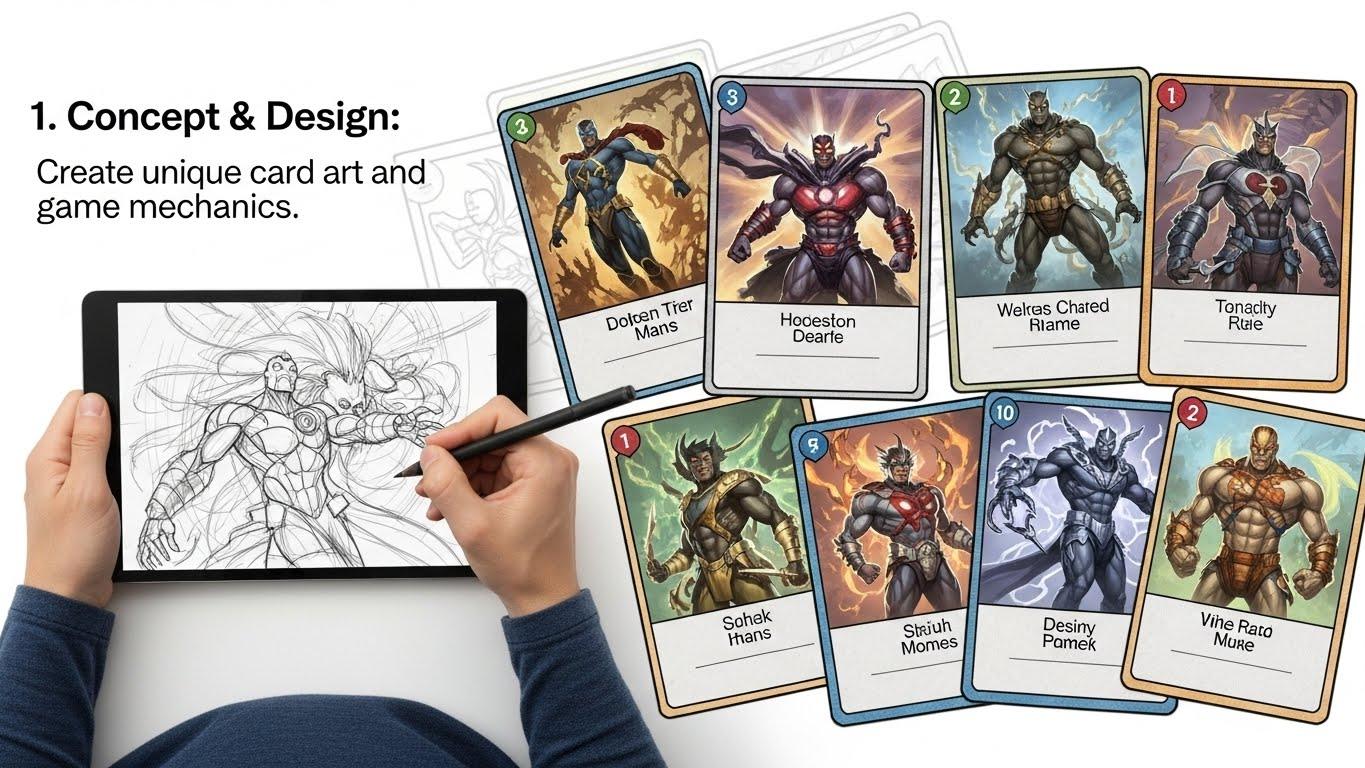
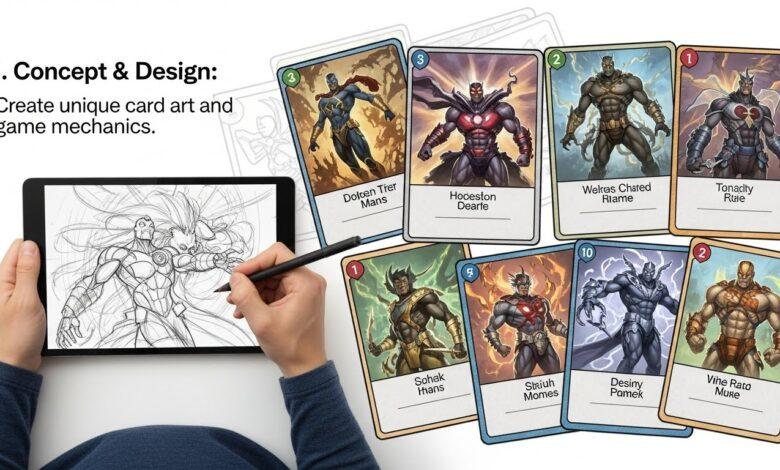
Now comes the fun part – actually designing your cards. You don’t need to be a professional artist either (though it helps!).
Tools for Creating NFT Card Designs
Here are some beginner-friendly options for making NFT art:
- Canva: Super easy drag-and-drop design tool
- Adobe Photoshop: Industry standard if you want professional results
- Procreate: Perfect for iPad users who like drawing
- GIMP: Free alternative to Photoshop
- Adobe Illustrator: Great for vector-based card designs
Design Tips for Digital Trading Cards
When you’re designing your NFT trading card art, keep these things in mind:
- Resolution matters: Use at least 2000×2000 pixels for crisp quality
- File format: PNG or JPEG works best for most NFT marketplaces
- Consistent style: If you’re making a collection, keep the look unified
- Rarity levels: Consider creating different tiers (common, rare, legendary)
I personally like adding small details that make each card unique. Maybe a holographic effect or special border for rare cards?
Step 3: Choose the Right Blockchain for Your NFT Cards
Alright, so here’s where it gets slightly technical (but stay with me!). You need to pick a blockchain to mint your NFT trading cards on.
Popular Blockchain Options
Ethereum: The most popular choice for NFTs, though gas fees can be expensive
Polygon: Built on Ethereum but with way lower fees – my personal favorite for beginners
Solana: Super fast and cheap transactions
Binance Smart Chain: Good balance of cost and features
For your first NFT trading card collection, I’d recommend Polygon. It’s cheap to use and widely supported.
Step 4: Set Up Your Crypto Wallet
You’ll need a digital wallet to create and sell NFT trading cards. Think of it as your blockchain bank account.
MetaMask is the most popular choice and works with most NFT platforms. Here’s how to set it up:
- Go to MetaMask’s website
- Download the browser extension
- Create a new wallet
- Write down your recovery phrase (seriously, don’t skip this!)
- Add some crypto for gas fees
You’ll need a small amount of cryptocurrency (ETH or MATIC) to cover transaction fees when minting NFTs.
Step 5: Choose an NFT Marketplace
Now you need to pick where you’ll actually create and sell your NFT collectible trading cards.
Best NFT Marketplaces for Trading Cards
OpenSea: The biggest NFT marketplace – great for reaching collectors
Rarible: User-friendly with good creation tools
Mintable: Perfect for beginners making their first NFT cards
NBA Top Shot: Specifically for sports card collectors (though closed ecosystem)
I started on OpenSea because it’s straightforward and has tons of potential buyers browsing daily.
Step 6: Mint Your NFT Trading Cards
Here’s the moment of truth – turning your artwork into actual blockchain NFT trading cards!
How to Mint NFT Cards Step-by-Step
Let me break down the minting process:
- Connect your wallet: Link MetaMask to your chosen marketplace
- Click “Create”: Look for the create or mint button
- Upload your card design: Add your PNG or JPEG file
- Add details: Include name, description, and properties
- Set rarity: Define if it’s common, rare, or unique
- Choose collection: Create a new collection or add to existing
- Pay gas fees: Confirm the transaction in your wallet
The whole process usually takes just a few minutes. Pretty cool seeing your art officially become an NFT!
Step 7: Price Your NFT Trading Cards
Pricing is tricky when you’re learning how to make and sell NFT trading cards. Too high and nobody buys. Too low and you undervalue your work.
Also read article : Advantages of Artificial Intelligence in Daily Life
NFT Card Pricing Strategies
Here’s what I’ve learned about pricing NFT collectibles:
- Start reasonable: For new creators, 0.01-0.05 ETH is typical
- Consider rarity: Rare cards should cost significantly more
- Check competitors: See what similar NFT card collections are selling for
- Build up gradually: Increase prices as you gain reputation
You can also set royalties (usually 5-10%) so you earn from future resales of your digital collectible cards.
Step 8: Market Your NFT Trading Card Collection
Creating NFT trading cards is only half the battle. You need people to actually see them!
How to Promote Your NFT Cards
Social media is key: Share your cards on Twitter, Instagram, and TikTok with relevant hashtags like #NFTCommunity, #NFTTradingCards, and #CryptoArt
Join Discord servers: Connect with NFT collectors and other creators
Build a story: People love the narrative behind NFT art collections
Engage with the community: Comment on other people’s work, be genuine
Create previews: Show your design process to build interest
Honestly, marketing takes more time than actually making the cards sometimes. But it’s worth it when you land that first sale!
C Top AI Tools in Transforming the Future of Technology
Advanced Tips for Creating NFT Trading Cards
Once you’ve got the basics down, here are some pro moves:
Create Card Packs or Bundles
Instead of selling individual cards, consider offering mystery packs where buyers get random cards. This gamification aspect makes NFT trading card games more exciting and can increase sales.
Add Utility to Your Cards
Give your NFT cards actual use beyond just collecting:
- Access to exclusive Discord channels
- Voting rights on future card designs
- Physical merchandise for holders
- Use in blockchain games
Build a Series
Rather than one-off cards, create a complete NFT trading card set. Collectors love completing sets, which drives demand.
Collaborate With Other Artists
Team up with other NFT creators to cross-promote and reach new audiences. Two creators are better than one!
Common Mistakes to Avoid
Let me save you from some headaches I experienced:
Don’t rush the design: Quality matters more than quantity when creating NFT collectibles
Don’t ignore gas fees: Calculate costs before minting multiple cards
Don’t spam: Posting constantly annoys people more than helps
Don’t copy others: Create original NFT artwork or you’ll damage your reputation
Don’t forget copyright: Only use images and designs you have rights to
Understanding NFT Trading Card Rarity
Rarity is huge in the NFT world. Here’s how to structure it:
- Common cards: 50-60% of your collection
- Uncommon: 25-30%
- Rare: 10-15%
- Epic: 3-5%
- Legendary: 1-2%
The scarcity factor is what makes certain digital trading cards more valuable. Supply and demand basics!
Legal Stuff You Should Know
Quick disclaimer – I’m not a lawyer, but here are important points:
Make sure you own the rights to all artwork you’re using for your NFT trading card designs. Don’t steal images from Google! Also, understand that different countries have different regulations around cryptocurrency and NFTs.
It’s smart to include clear terms about what buyers actually own when they purchase your NFT collectible cards.
How Much Money Can You Make?
Real talk – most people don’t get rich from their first NFT drop. But creating NFT trading cards can definitely generate income if you:
- Build a consistent collection
- Engage with the community regularly
- Create quality, original artwork
- Market effectively
Some creators make a few hundred dollars. Others make thousands. It depends on your effort, timing, and honestly, a bit of luck too.
Tools and Resources for NFT Card Creators
Here are some helpful resources I use:
Design: Canva, Adobe Creative Suite, Procreate Learning: YouTube tutorials, NFT Discord communities Inspiration: OpenSea trending collections, Twitter NFT spaces Analytics: Rarity.tools for checking how your cards rank
Also read article : Cloud Computing Solutions: Powering Your Digital Transformation
Future of NFT Trading Cards
The NFT space is evolving fast. We’re seeing more integration with:
- Gaming platforms that use NFT cards
- Augmented reality displays
- Cross-platform compatibility
- Physical redemptions
Getting in now means you’re still relatively early to the digital collectible card movement.
Final Thoughts
So there you have it – everything I’ve learned about how to make NFT trading cards. Is it easy? The technical side is actually pretty simple. The hard part is creating awesome art and building an audience.
But here’s what I love about creating NFT collections – you’re building something that could potentially last forever on the blockchain. Your digital trading cards aren’t going to yellow with age or get damaged like physical cards.
Whether you’re looking to make money, express your creativity, or just explore this new technology, making NFT trading cards is an exciting journey. Start small, learn as you go, and don’t be afraid to experiment.
Remember, every successful NFT creator started exactly where you are now – with zero cards minted and a head full of ideas. The difference is they took that first step.
So what are you waiting for? Your NFT trading card collection is waiting to be created!
Frequently Asked Questions
How much does it cost to create NFT trading cards? It depends on the blockchain you choose. On Polygon, you can mint for under $1. On Ethereum mainnet, expect to pay $50-$200 in gas fees depending on network congestion.
Do I need coding skills to make NFT cards? Nope! Modern NFT marketplaces make it super easy to create NFT trading cards without any coding knowledge whatsoever.
Can I sell NFT trading cards for free? Some platforms like OpenSea let you list for free using lazy minting, where the buyer pays the gas fee. However, you’ll eventually need some crypto for transactions.
How long does it take to create an NFT card? The actual minting takes minutes. Creating the artwork can take hours to days depending on your skill and vision.
What makes NFT trading cards valuable? Scarcity, artistic quality, community engagement, and utility all contribute to the value of digital collectible cards.
Good luck with your NFT journey! Feel free to start creating and see where it takes you.