
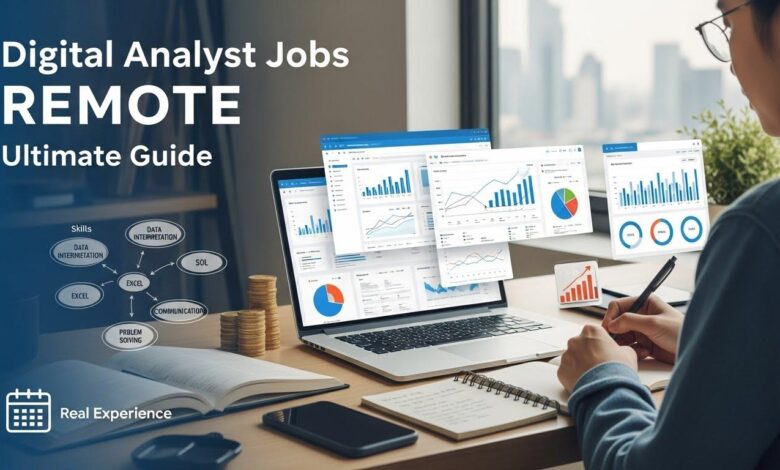
Remote work has changed the digital industry, and digital analyst jobs remote are now among the fastest-growing careers. If you enjoy working with data, finding patterns, and helping businesses make better decisions, this role can be a great fit.
Based on hands-on experience in the digital and tech space, the digital analyst role often works even better in a remote setup. The job is focused on data and insights rather than office politics, which improves productivity and results.
What Is a Digital Analyst?
A digital analyst is a professional who:
- Analyzes website and app traffic
- Studies user behavior and conversion funnels
- Measures marketing and product performance
- Turns data into clear, actionable business recommendations
In simple terms, a digital analyst converts data into business growth.
Why Digital Analyst Jobs Are Going Remote

From real project experience, companies have learned that:
- Analytics tools are cloud-based
- Teams collaborate using dashboards, Slack, and video calls
- Physical office presence is not required for analytics work
Because of this, remote digital analyst jobs are increasing every year.
Skills Required for Remote Digital Analyst Jobs
Below are real-world skills that actually matter on the job, not just theory.
Technical Skills
- Google Analytics 4 (GA4)
- Google Tag Manager
- Excel or Google Sheets
- Basic SQL
- Data visualization tools such as Looker Studio or Power BI
Soft Skills (Based on Real Experience)

- Clear written communication (essential for remote roles)
- Strong business understanding and context
- Problem-solving and analytical thinking
In practice, analysts who can clearly explain insights grow faster than those who only know how to use tools.
Tools Used by Remote Digital Analysts
Commonly used tools on real projects include:
- Google Analytics 4
- Looker Studio
- Ahrefs or SEMrush
- Hotjar
- Tableau or Power BI
Practical experience with these tools matters more than certificates, especially in real hiring situations.
A Day in the Life of a Remote Digital Analyst
A remote digital analyst usually has a flexible but highly focused daily routine. Based on real-world experience, a typical day often includes:
- Checking dashboards in the morning to review traffic, conversions, and unusual trends
- Preparing daily or weekly performance reports
- Attending virtual meetings with marketing, product, or growth teams
- Analyzing user behavior, funnels, and conversion paths
- Documenting insights and clear recommendations for decision-makers
In a remote setup, clear documentation is critical because decisions are made using data, not assumptions.
Companies Hiring for Digital Analyst Jobs Remote
Many global companies actively hire remote digital analysts. Well-known examples include:
- Google (contract and analytics roles)
- Amazon
- Shopify
- HubSpot
- Automattic (WordPress)
- SaaS startups based in the United States, United Kingdom, and Europe
In addition to large companies, remote-first organizations and startups regularly hire analytics professionals worldwide, especially candidates with GA4 and BI tool experience.
Common Interview Questions for Remote Digital Analyst Jobs
Remote digital analyst interviews often include questions like these:
1. How do you measure website performance?
A strong answer should cover traffic sources, conversions, engagement metrics, and clearly defined business goals.
2. How do you explain data to non-technical teams?
Interviewers look for clarity, storytelling skills, and the ability to use simple visuals or examples.
3. Which KPIs matter most for business growth?
The best answers explain KPIs based on business goals such as sales, leads, retention, or lifetime value.
4. How do you work independently in a remote role?
Highlight time management, documentation habits, accountability, and communication skills.
Real Success Story: From Beginner to Remote Digital Analyst
One real example involves a beginner analyst who implemented GA4 on a personal blog, built reporting dashboards, and started creating weekly performance reports. Within six months, this individual secured a remote role with a US-based SaaS company.
The key reasons behind this success were:
- Consistent hands-on practice
- A strong and practical portfolio
- Clear communication and reporting skills
This example shows that remote digital analyst jobs are earned through real skills and proven experience, not degrees alone.
How to Get a Remote Digital Analyst Job (Practical Steps)
Step 1: Build Hands-On Experience
Start with your own website or a test project:
- Track traffic and conversions
- Build reports and dashboards
- Write insights and recommendations
Step 2: Create a Simple Portfolio
Your portfolio should include:
- Dashboard screenshots
- Short case studies
- Clear, measurable results such as improved CTR or reduced bounce rate
Step 3: Apply on the Right Platforms
- We Work Remotely
- Remote OK
- Upwork (useful for starting with freelance projects)
Salary for Remote Digital Analyst Jobs
Average remote salaries based on experience level:
- Entry level: $1,000 to $2,000 per month
- Mid level: $3,000 to $5,000 per month
- Senior level: $6,000 or more per month
Analysts with strong portfolios are usually in a better position to negotiate higher pay.
Is Digital Analyst a Good Career in 2025?
Yes, absolutely.
Even with AI and automation:
- Data interpretation still requires human judgment
- Strategic business decisions depend on human insight
This makes the digital analyst role future-proof, especially in remote positions.
FAQs – Digital Analyst Jobs Remote
Can beginners get remote digital analyst jobs?
Yes, if they have practical experience and a strong portfolio.
Do I need a degree?
A degree can help, but it is not mandatory.
How long does it take to learn digital analytics?
With focused practice, most people can learn the basics in 3 to 6 months.
Is freelancing better than a remote job?
For beginners, a remote job offers stability. Freelancing often works better after gaining experience.
Final Thoughts
Digital analyst jobs remote are ideal for professionals who enjoy working with data and value flexibility. With consistent learning, hands-on projects, and strong communication skills, this career offers excellent growth, income potential, and long-term stability in the digital world.
To strengthen rankings further, add internal links from related tech and digital articles and update this post every three to four months with new tools, trends, or salary data.